
 Soonqian
Advantages Of Automated Picking And Packing Systems
The core advantage of automated picking and packing systems is, to put it bluntly, that business growth is no longer driven by manual labor. This system stabilizes output by eliminating human error, regardless of labour market fluctuations. Once a WMS (warehouse management system) is deeply integrated with an AS/RS or AMR, order accuracy can be basically stabilized at 99.9% and fulfillment cycles can be shortened by more than half. More importantly, it can drain every inch of your existing warehouse, saving you from having to spend money on factory expansion for business expansion. Ultimately, automation transforms the previous labor efficiency bottleneck into a scalable, data-driven engine that significantly reduces average cost per unit area while ensuring rapid ROI through continuous operational optimization.
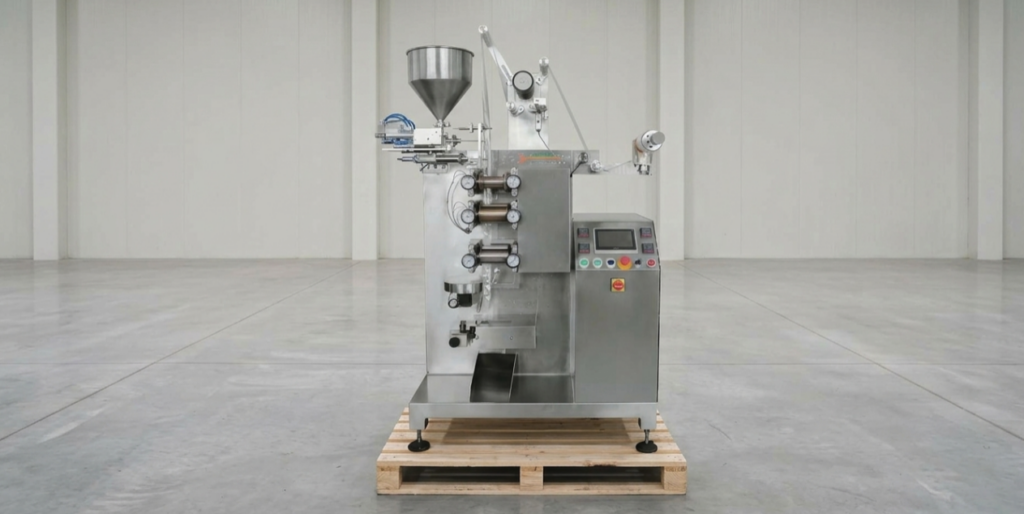
Business Growth And Labor Fluctuations “Decoupling”
One of the most hardcore advantages of automated picking and packaging systems is that they can achieve business scale without increasing manpower proportionally. The traditional warehouse model is too rigid ——a 20% increase in order volume often means you have to hire 20% more porters. But in the current environment, finding reliable people is not only difficult, but also prohibitively expensive.
Through on-site automation, companies can truly decouple output from headcount “decoupling”. Devices like AMR robots or high-speed sorters, which can run continuously 24 hours a day just by supplying electricity, have no idea what fatigue is. In the explosive single-order period of “Black Five” or “Double Eleven”, companies that have gone through the system do not need to fill the streets looking for temporary workers like before. This shift from a human-
intensive to a capital-intensive model provides long-term stability to your operating expenses.
Scaled Precision
Many people tend to underestimate the financial damage caused by picking the wrong goods or packaging the wrong parts. From reverse logistics costs, re-entry fees to potential loss of customer lifetime value, even a small mistake can directly lose profits on several orders.
A core killer of automated systems is the ability to push accuracy to the limit of 99.9%. With visually guided picking, load cells and direct instructions from the WMS, the system ensures that the process “cargo to frame, piece to box” does not deviate. This accuracy directly cuts off the redundant links of manual secondary review, allowing the entire workflow to run very fast. In an age where customers give negative reviews at the slightest hint of displeasure, this is the key to maintaining brand reputation.
Significant Compression Of Order Fulfillment Cycles
In the e-commerce sector, speed is absolute competitiveness. Manual picking is slow largely because employees waste their time going back and forth “running errands” between shelves covering thousands of square meters.
Automation technology has completely rewritten the game through GTP and AS/RS. Instead of having employees fill the warehouse looking for goods, it is better to let the shelves or material boxes go to the workstation “and walk” to follow. This one-in, one-out, order fulfillment cycle can be reduced by at least 50%. Once the picking and packaging process is compressed, your cut-off time (cut-off time) can be extended, which gives you the advantage of dimensionality reduction and attack service when facing your peers who still rely on manual brick removal.
Extracting The Maximum Value From Existing Properties
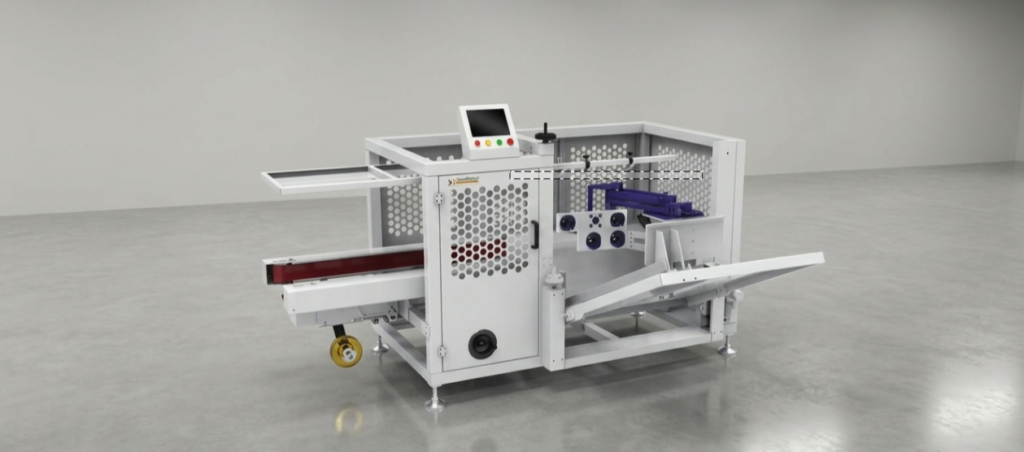
Warehouse rents are ridiculously expensive these days, and resources are scarce in good locations. Automated systems have a huge hidden advantage in structure: extreme use of space. Old warehouses waste a lot of area to allow passage for forklifts and manual picking trucks.
In contrast, AS/RS systems can poke right up to the ceiling, making the most of vertical space and often have a storage density 400% higher than traditional shelves. By utilizing the one and three acres of land you already have, you can postpone or even cancel expensive relocation or expansion plans. This logic “doing more with less” is the only way to maintain a lean supply chain.
Driving ROI By Reducing Average Cost Per Unit
Ultimately, whether to switch to automation is a rigorous financial decision. By introducing high-speed packaging machines and precise robots that can automatically match box sizes, the average cost per order will be kept very low.
The savings in shipping costs (because the box volume is optimized), labor costs, and error correction costs will add up to a very beautiful ROI curve. From an architect’s perspective, I don’t view these systems as mere expenses, but rather as data engines that ensure continuous operational advantages. In the increasingly automated world of the future, this is the moat that will remain profitable for a long time.
Author: David Harrison
Throughout my career, I have focused on helping global enterprises overcome labor volatility and space constraints by implementing cutting-edge robotics and WMS integrations. My mission is to transform traditional warehouse bottlenecks into scalable, data-driven engines that deliver measurable ROI and long-term operational excellence.
Last updated: April 20, 2026
