 Soonqian
Top Single Dose Packaging Machines For Fast Scaling
Want to soar from 10000 to 500000 units per day? You have to have multiple columns of form-fill-and-seal (FFS) equipment, and you have to have servo drives and tool-less change-over systems. Upgrading the single-dose packaging machine is the “core grip” that allows you to double the output directly without increasing the plant area “.
Many factory managers only stare at cycles per minute (CPM) when signing purchase orders. This narrow focus often creates huge production bottlenecks. To be honest, the real core indicator for achieving a rapid jump in production capacity is the ratio between the operating speed of the machine and the downtime of the change.
Let’s take a hard-core dismantling to see which machine architectures can really bring extremely high overall equipment efficiency (OEE) to pharmaceutical companies and start-up health care companies.
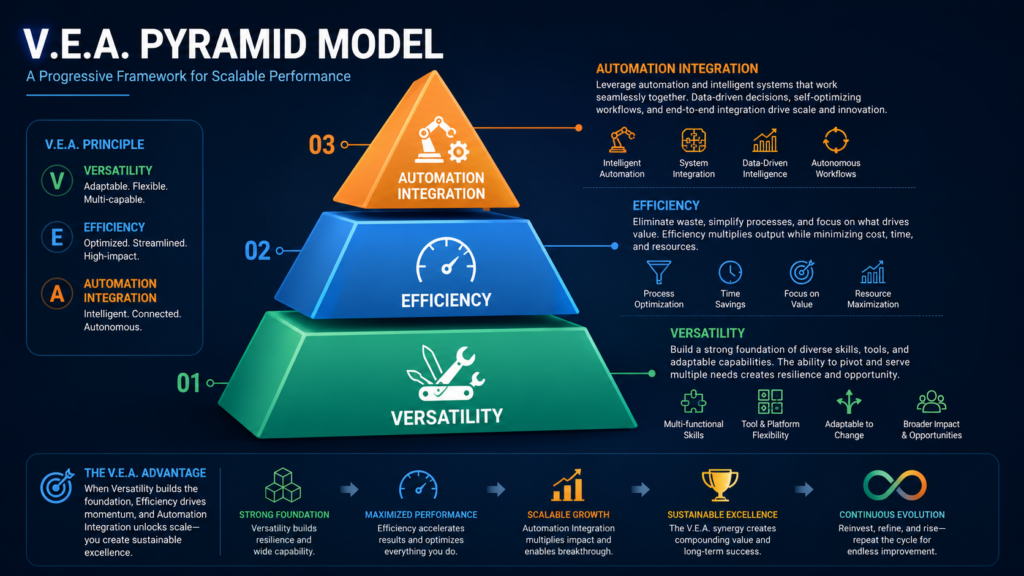
The V.E.A. Extended Pyramid: A New Scale For Evaluating Devices
Just look at the parameters on the product brochure to buy equipment, buy absolute regret. Those smart factory managers who can successfully double production capacity in just six months are picky about single-dose packaging machines with the “V.E.A. expansion pyramid”-versatility (Versatility), efficiency (Efficiency) and automation (Automation).
Versatility (Versatility) determines the boundaries of your product line. Today, start-ups in the big health sector often have to switch back and forth between collagen powder, liquid electrolytes and vitamin gels. If the machine you buy is so rigid that it can only package particles with good fluidity, you will have to bite the bullet and buy a new production line when you plan to add viscous liquid products. The top machines are modular filling stations. You can directly replace the measuring cup filler with a servo-driven piston pump in less than 45 minutes, and the forming and sealing structure of the bottom layer of the machine does not need to be moved at all.
High efficiency (Efficiency) requires you not to be fooled by theoretical CPM. It is claimed that 1200 bags can be packed per minute, but if the film is easily broken due to the tension problem of the rolling film, then the speed is meaningless. The high-end single-dose packaging opportunity uses a closed-loop AI tension control system. Its sensor can keenly capture even the slightest stretch on the flexible membrane roll and adjust the torque in milliseconds. This not only keeps the scrap rate below 0.5 percent, but also ensures that the machine continues to run at high speed.
Automation (Automation) is a moat to prevent downstream blockage. The filling machine spits out 800 bags in a minute. If the workers pick up and pack the bags manually, the picture is a nightmare. In order to expand production quickly, the machine must be able to seamlessly interface with the robot picking and packing system and the online checkweigher.
Top Single-Dose Packaging Machines For Each Application Scenario
Completely matching the mechanical physical properties of the machine with the rheology (I. e., flow characteristics) of the product can help you avoid those extremely expensive downtime accidents.
High-speed multi-row bag packaging system (the king of powders and granules)
Powder products once to expand production, dust control is definitely a big trouble. Extremely fine dust, such as matcha tea or raw material drug (API) powder, can easily contaminate the sealing forceps, resulting in tiny air leaks that are invisible to the naked eye. The top packaging equipment for powders is equipped with a closed suction hood and a vacuum assisted screw filling machine. If you want the highest capacity density per square meter, you have to have 10 to 24 trains of machines running simultaneously. In these multi-column systems, servo motor technology can independently control each of the screw. With this independent control, the dose weight error can be accurately controlled within 1%, which directly helps you completely erase the risk of “dose uniformity” in FDA review.
Liquid sachet FFS packaging equipment (health gel preferred)
Viscous liquids require extremely high pressure shear to cut cleanly without dripping. When packaging energy glue or children’s syrup, the performance of ultrasonic sealing technology completely crush the traditional heat seal. The reason is very simple, high sugar liquid in high-speed injection is very easy to splash into the sealing area, heat sealing pliers will directly scorch the sugar, destroy the integrity of the entire seal. The ultrasonic sealing pliers can penetrate the liquid pollution layer through vibration, even if the sealing area is wet, the plastic film can be perfectly welded together. In addition, to expand your liquid line, your equipment must also be compatible with integrated clean-in-place (CIP) and sterilization-in-place (SIP) capabilities. Look for those machines whose contact parts are made of 316L stainless steel and sanitary clamp fittings. They can manually disassemble and clean the 6 hours that used to be tossed and turned into a full-automatic flushing cycle of only 60 minutes.
Advanced blister packaging line (best partner for solid preparations)
If the blister packaging machine wants to smoothly cross from the clinical trial stage to the full commercial mass production, it must be able to cope with the rapid mold switching between aluminum (cold forming) and PVC/PVDC (hot forming) film. Top-notch blister packaging equipment uses flat sealing technology to extend the holding time, which provides an absolute barrier to moisture and oxygen. If you want to quickly increase production capacity, remember to choose the model with its own camera vision inspection system. These online cameras will instantly kick out blisters that lack medicine or have defective tablets, allowing the main line to soar at a speed of 600 + boards per minute without manual quality inspection intervention.
Single Dose Packaging Machines Comparison
| Machine Type | Footprint (Space Efficiency) | Changeover / Cleaning Time | Applicable Materials | Max Speed |
| High-Speed Stick Pack Multilane Systems | Highest output density per square meter (Compact design utilizing 10 to 24 lanes simultaneously) | Fast / Servo-Driven (Independent servo-motor control for quick parameter adjustments) | Powders & Granules (Fine powders like matcha, pharmaceutical API blends) | Extremely High (Output multiplied by 10 to 24 simultaneous lanes) |
| Liquid Sachet Form-Fill-Seal (FFS) | Requires integration space (Must accommodate integrated CIP/SIP systems and 316L stainless tri-clamp fittings) | 60-Minute Wash Cycle (Automated CIP/SIP reduces downtime from a 6-hour manual teardown) | Viscous Liquids & Gels (Health gels, energy gels, pediatric syrups, high-sugar liquids) | High-Speed Injection (Supported by ultrasonic sealing that vibrates through liquid contamination) |
| Advanced Blister Packaging Lines | Extended Footprint (Accommodates platen sealing for extended dwell times and inline camera vision inspection systems) | Rapid Tooling Shifts (Fast transitions between Alu-Alu cold form and PVC/PVDC thermoform films) | Solid Pharma Doses (Pills, tablets) | 600+ blisters per minute (Continuous running without human QA intervention) |
Why Does Blindly Seeking Faster Instead Drags Your Expansion Plan?
Staring at the maximum speed parameter will often make people step into the “change trap”. Many investors paid a lot of money to buy ultra-high-speed equipment, only to be dumbfounded when they bought it back: the machine was designed to be extremely anti-human, and it took 3 a mechanic to sweat profusely for half a day with a wrench to change the column width.
Let’s make a calculation: if your factory has to run 3 different SKU’s every day, the machine that is labeled 1000 pieces per minute will definitely not run 600 pieces per minute in the end.
Machine A(1000 CPM): It takes 4 hours to change the mold and film.
Machine B(600 CPM): With tool-free change function, it only takes 30 minutes to complete.
If you have to make two changes per shift and wait for a week to run down, machine B will produce more saleable finished products instead. Real-world production data have long demonstrated this.
Actual combat case: contract manufacturer (CMO)PharmaTech Solutions used the old pneumatic packaging machine before, and then they decisively replaced it with multi-column equipment driven by full servo. With the PLC (programmable logic controller) interface that can store the formula, the operator can accurately call up the temperature, pressure and filling volume settings with a few points on the touch screen. They cut the time for physical change from 4.5 hours to 45 minutes. Although the theoretical maximum speed of the new machines is slightly slower, their actual weekly shipments have skyrocketed by 32%.
GMP Compliance And Dealing With FDA Review
When expanding the production capacity of drugs or health products, factory directors are faced with ruthless scrutiny by regulators. Your equipment must be a god assist on your way to compliance, not a drag.
The first point, hit the data record. A single-dose packaging machine that complies with cGMP requirements must be able to record every parameter modification, operator login and alarm event in detail (in accordance with 21 CFR Part 11 compliance requirements). As soon as the inspector enters the door, you have to be able to export these audit trails immediately and put them in front of them.
The second point is to use a magnifying glass to see if there are “dead corners” in the mechanical design “. Sloping surfaces, as little horizontal water as possible, coupled with IP65 (or even higher) flushing protection level, this is the bottom line to prevent microbial accumulation. All cables must be routed inside. If you look at the machine and find that there are a bunch of external pneumatic pipes tied with ties outside the equipment, turn your head and go, don’t buy it! It was purely a bacterial petri dish, really doing a surface smear test to definitely hang the branch.
FAQs
commercial single dose packaging machine general how much does it cost?
From a single-row entry machine of $40000 to a high-speed multi-row servo system with robot integration of more than $500000, the price span is very large. How much you spend depends entirely on how many columns you want to buy, how high the degree of automation is, and whether there are special filling requirements.
How can you reduce film waste when using a pouch packaging machine?
Guide the edge to the correction system and the automatic membrane module arrangement. Before the soft film enters the forming tube, these technologies can align the film tightly. In continuous production, the waste film produced by misalignment can almost be cleared.
Can a machine pack a single dose of liquid and powder at the same time?
Yes, but when you buy it, you must emphasize to the manufacturer that you want “modular design”. The base frame and sealing pliers of the machine do not move. When you want to pack different things, just let the workers change the filling module on the top (powder for screw, liquid for piston pump).
What is the difference between Stick Packs and Sachets?
The strip bag is tubular, with a longitudinal back seal and seals at both ends. A single dose can save up to 40% of the film material. The pouch is flat, usually three-sided or four-sided seal, its surface area is larger, convenient for brand display, capacity can also be slightly larger.
How often do single-dose packaging equipment need to be maintained?
Preventive inspections (e. g., cleaning of sealing pliers, inspection of Teflon tape) are required on a daily basis for high-volume production lines. And large-scale mechanical preventive maintenance (like lubrication, check bearings, change seals), generally every 500 to 1000 hours of operation to do once. The specific time can pay more attention to the alarm prompt of the manufacturer’s predictive maintenance software.
Why does my strip bag package leak at the seal?
There are no more than 3 main reasons for air leakage: the sealing area is contaminated by products (dust enters or liquid splashes out), the heat sealing temperature for the current film thickness is not set properly, or the pressure on both sides of the sealing pliers is uneven. Upgrading the equipment to a vacuum or ultrasonic sealing function, usually can completely cure these problems.