
 Soonqian
Liquid Stick Packing Machine
The key to choosing a liquid stick packaging machine depends on three indicators: flexibility, accuracy and whether it is easy to maintain in the later stage.
To make this return on investment even higher, I strongly recommend that you prioritize models equipped with high-precision piston pumps and PLC control systems, preferably with an intuitive and easy-to-use HMI touchscreen. Even if you don’t have a dedicated technician, you can easily adjust the filling volume and sealing temperature through this system to handle various viscosity materials from thin as water to thick as glue.
A truly professional industrial-grade device must have a vertical forming fill seal mechanism and a stable back seal structure, which are hard conditions to prevent leakage. At the same time, all parts that come into contact with the material must be made of 316 or 304 stainless steel, which is the bottom line for meeting GMP standards and food safety specifications. Choosing a machine with a compact structure, stable accuracy and easy parts cleaning can not only help you reduce film loss and labor costs, but also directly improve the texture of your packaging by one level, making it truly competitive in the market.
Eat All Kinds Of Viscosity Materials
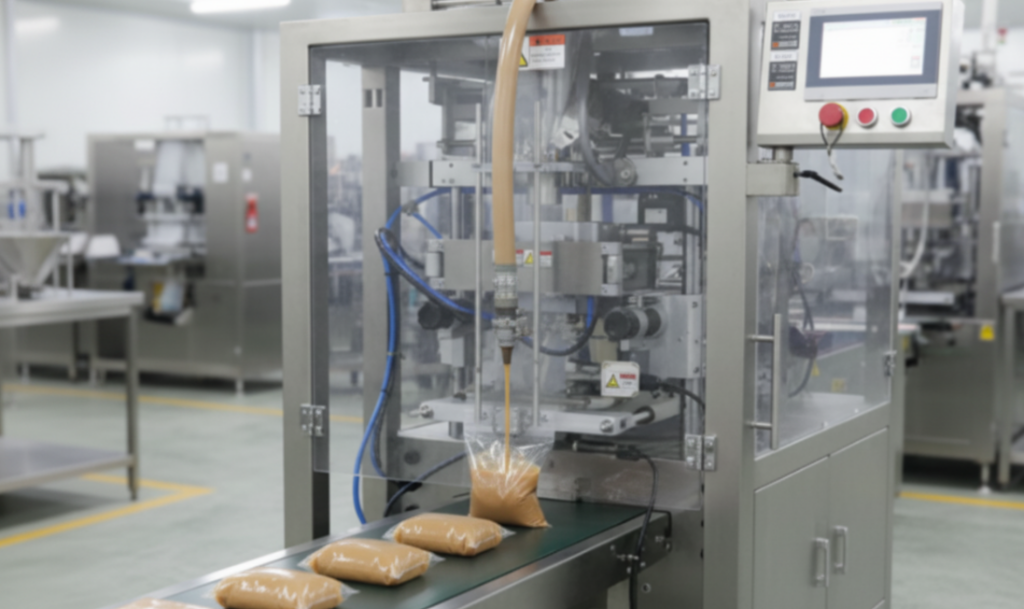
One measure of whether a liquid stick packing machine is good or bad is whether it can cope with a diversified product line. For startups on the rise, you might be packing honey or syrup today and taking orders for thinner oral fluids or thicker beauty gels tomorrow.
There is no need to buy a new machine for every product. As long as the high-precision piston pump that comes with the machine is used well, the filling dosage can be controlled to death no matter how the fluidity of the material changes. This versatility means you can play with multiple projects on one device. With the HMI touch screen, operators can complete digital parameter calibration in minutes, allowing your production line to keep up with changes in market wind direction at any time.
Deep Cooperation Between PLC System And HMI
In the line of automated packaging, precision directly equals profit. The PLC is the brain equivalent of this liquid stick packing machine, which synchronously controls the membrane pulling, bagging, filling and sealing actions with millisecond precision.
I have come into contact with many bosses who have no technical background and are most afraid that the machine will be difficult to use. At this time, the good HMI touch screen became a lifesaver. It reduces complex mechanical engineering logic into intuitive instructions. You can fine-tune the sealing temperature directly on the screen to fit different packaging films, or fine-tune the filling volume to avoid spillage. From what I’ve observed, this high level of control ensures that every bag of strips you release is exactly the same, which is crucial to maintaining a brand’s high-end image.
Vertical Packing
Vertical sealing servo, heat sealing servo
cold sealing servo, cutter servo
DKXL-650
Precision weighing or multi-head scales ensure consistent bag weight, with quality sensors enhancing packaging accuracy.
WP20
Automatically complete the processes of bag making, measuring, filling, sealing, bag cutting, etc., greatly improving the packaging speed.
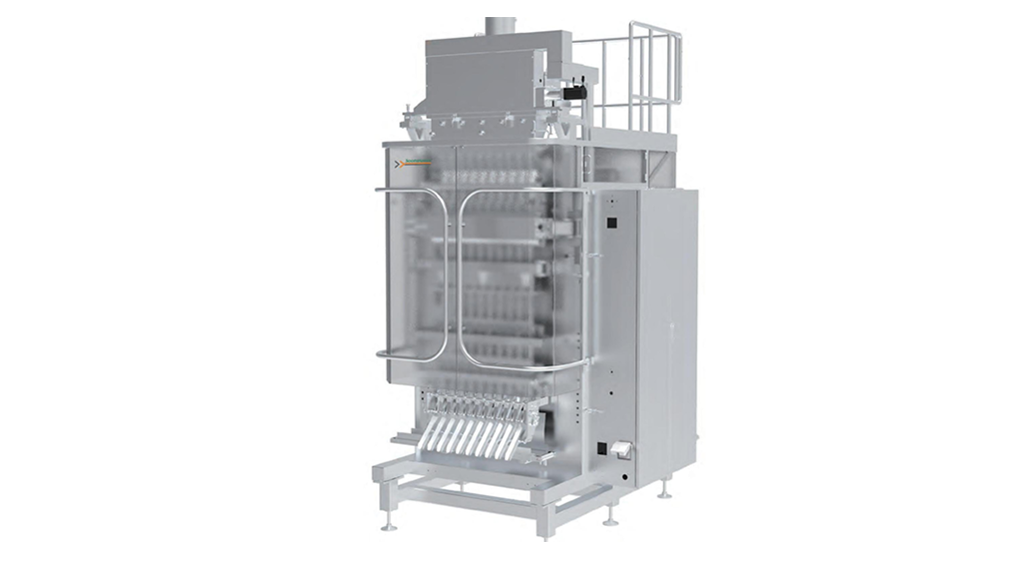
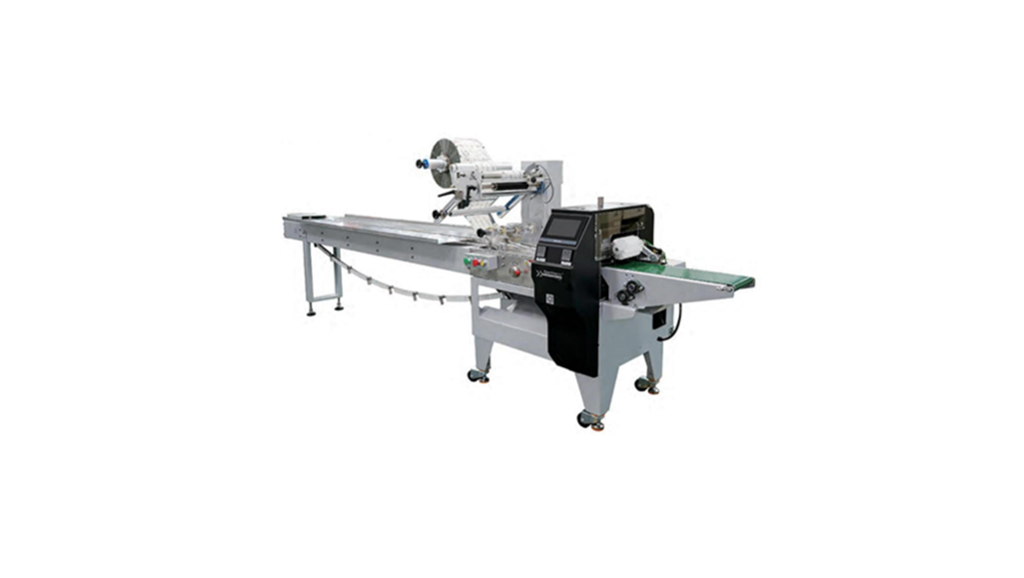
VFFS And Backsealing Technology
Leaks are the most troublesome pit in liquid packaging. At best, they can contaminate the entire batch of goods, and at worst, they can attract customer complaints. To combat this problem, professional equipment uses the VFFS mechanism. This gravity-assisted process allows liquid to flow more smoothly into the bag, and then completes precise positioning before sealing.
“Back seal” is much more reliable than side seal when sealing liquids. It is more evenly stressed and forms a very stable leak-proof barrier. Combined with the sensitive temperature sensor, the integrity of the seal will not be compromised even if the machine is running at full power and high frequency. This is also required by large retailers worldwide “leakproof guarantee”.
Sticking To GMP And Stainless Steel Standards
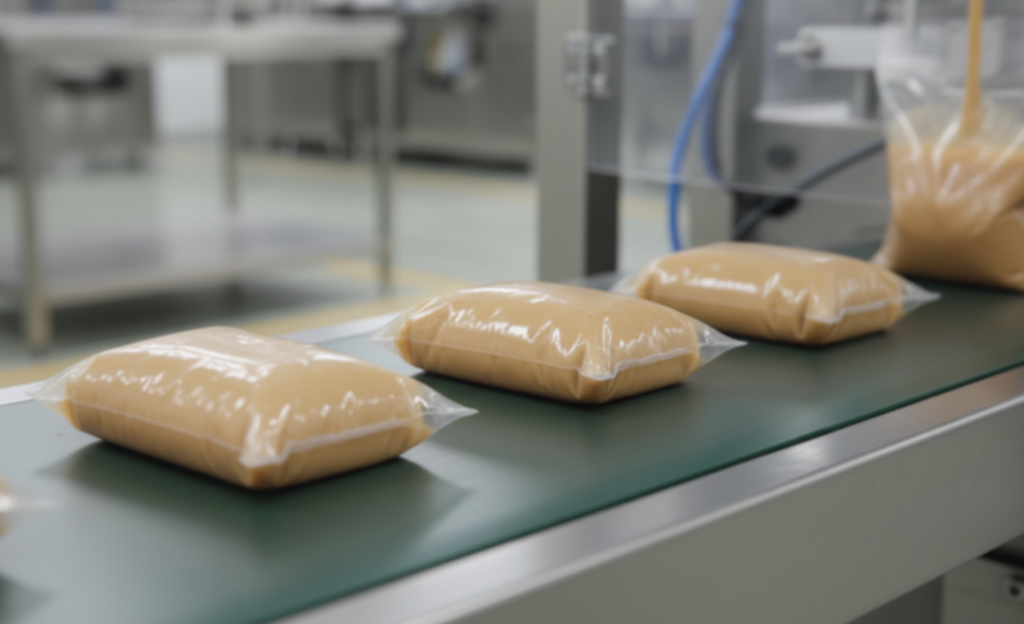
If you’re running a food, beverage, or pharmaceutical line, compliance is non-negotiable. A qualified liquid stick packing machine, all contact parts must be made of 304 or even 316 stainless steel. It’s not just about sturdiness, it’s more about corrosion resistance and hygiene.
As required by GMP, these machines must be designed with “easily removable and washable” logic in mind. Those quick-install components and polished surfaces can effectively prevent bacterial growth, and the disinfection work during the change of production can also be much faster. This adherence to materials can ensure that your equipment will not rust or lose its chain after years of use when facing acidic or alkaline liquids.
Saving Materials And People
The degree of automation of VFFS can liberate manpower considerably. A journeyman can keep an eye on a machine that produces dozens of packs per minute, and you can move the saved human resources to the market and scale up. Precise cutting and sealing minimize film waste, and every penny of raw materials is used on the blade.
Author: Marcus Chen
Throughout my career, I have focused on designing and commissioning integrated production lines for liquid and paste products, helping hundreds of startups transition from manual labor to high-efficiency automation. My mission is to bridge the gap between complex mechanical engineering and practical business growth, ensuring every piece of equipment—like the liquid stick packing machine—delivers maximum reliability and a clear path to profitability.
