
 Soonqian
How To Use Strapping Machine
Simply put, using a packer is to pass the packing belt around the goods, feed it into the machine or tool, tighten, seal and cut off. Although the operating details of the hand tool (tensioner/sealer combination) and the automatic machine are slightly different, the underlying logic is the same. Manual tools rely on the principle of leverage, which requires a little effort to press and cut. Automatic machines are much more convenient, they can sense load, and the rest of the work can basically be done by foot switches or buttons.
Manual Packing Tool Practical Operation Guide
Hand tools are “standard” when handling irregular goods or in remote packing stations “.
This video demonstrates how to use a manual handheld strapping tool:
Step 1: Winding And Positioning
The first step is to pose. Whether it is plastic steel belt or steel belt, when bypassing the goods, be sure to ensure that the belt is flat and fit, and never twist the twist. The two ends coincide on the top surface of the packing box or pallet. This plane is very critical because the tool must sit firmly on it to exert force.
Step 2: Load Strap Correctly
This is the easiest step for a novice to screw up. To have the tool bite the strap:
Operation: Pinch the handle and lift the “foot” (presser foot) of the tensioner.
Away: Slide the overlapping two layers of tape into the tool. Many people will put the wrong layer. Remember: the end near your body is usually placed under the grabber, and the end should leave about 5 inches (12-15cm) of margin.
Why? This margin is to prevent the strap from slipping directly out of the gripper because it is too short when you tighten it crazily.
Step 3: Tension Operation
After the strap is installed, release the handle and lock it. Start now:
Actuation: Hold the tension lever and the base handle to activate the ratchet mechanism.
Afterburner: Shake the tightening handle back and forth. With each shake, the gears turn and tighten the strap.
Judgment: How tight should it be? The strap should be slightly tightened into the edge of the box (or corner protector) so that it will not shake during transportation. I often tell my men, don’t be afraid of the belt breaking, just be afraid of the goods breaking up, but also have a degree.
Step 4: Seal
After the strap is tightened, it must be locked before the tool is removed:
Put the buckle: take a metal closure buckle (clip), set in front of the tensioner on the overlapping strap.
Press: close the handle of the sealing machine. If you are using a separate sealing clip, align the metal buckle and press it directly to the end. This step must be done in one step to deform the metal buckle and firmly “weld” the straps together.
Step 5: Cut-Off And Exit
In the final step, the tools and goods are separated. Pinch the tension lever and the base handle again (or press the cut-off button once) and cut off the excess strap. At this time, the presser foot of the tool will loosen and you can slide the tool out from under the strap.
Guide To Semi-Automatic And Fully Automatic Balers
Watch this video to see how to operate a semi-automatic strapping machine:
Step 1: Cargo Positioning
Speed comes from precision. Place the packing box on the packing path of the machine. If it is a semi-automatic machine, it is usually placed on a stainless steel table; if it is fully automatic, make sure that the box is in the center of the frame.
Step 2: Feeding Belt And Induction
Semi-automatic: You have to push the leader into the guide mouth manually. Once the machine senses the tip, it will automatically take over.
Fully automatic: the machine has its own sensor, and when the box is in place, it automatically wraps around the belt through the frame system without manual intervention.
Step 3: Packing, Straining And Sealing
This is the most time-saving place. Press the button or step on the foot:
Cycle process: The machine will instantly withdraw the tape to eliminate slack, and then automatically complete the tightening and sealing.
Technical point: Unlike manual metal buckles, these machines usually use hot melt or friction welding technology to directly “stick” the end of the plastic tape to death.
Step 4: Automatic Cut-Off
The moment the seal is completed, the machine will automatically cut off the remaining material and immediately spit out a new piece of tape to prepare for the next box.
Tips For All Machines
Materials, setup and maintenance are indispensable to the packaging process.
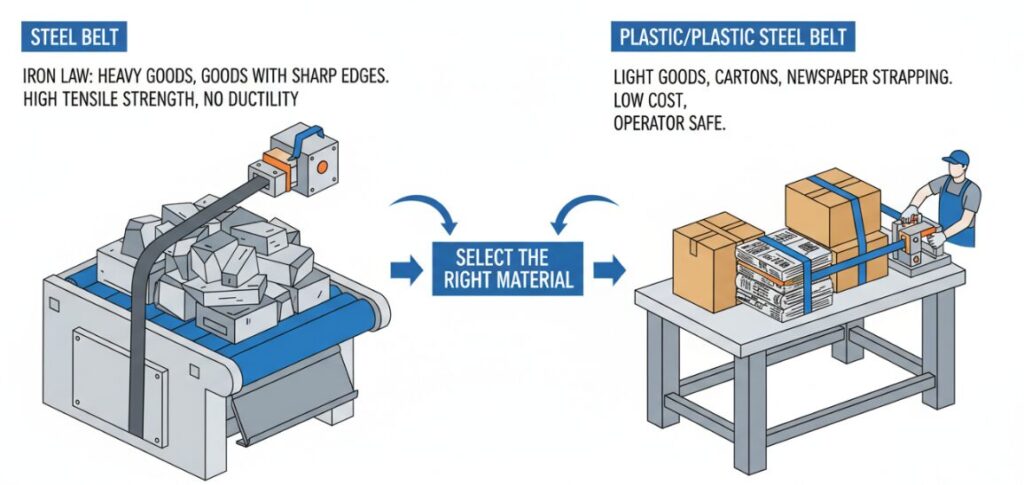
Select The Right Material:
Steel belt: iron law-heavy goods, goods with sharp edges and corners, directly on the steel belt. It has high tensile strength and basically no ductility.
Plastic steel belt/plastic belt: this is used for light goods, cartons or newspaper strapping, the cost is low, and the operator is not easy to cut his hand.
Machine Commissioning (For Semi-Automatic):
If you find that the strap is too loose, look for the knob on the back of the machine or in the cabinet. Turn it clockwise to increase the tension.
Temperature control: The temperature of the hot melt sheet should be just right to melt the tape open but not scorch. Generally speaking, factory presets are enough, but if you change straps of different thicknesses, remember to fine-tune them.
Routine Maintenance:
The baler is not made of iron. Regularly check the wear of the tension wheel and cutter.
Lubrication: oiling moving parts. But I must remind you: keeping the inside of the machine free of plastic dust and debris is more important than oiling. There is too much debris, and the machine must be stuck.
Author:Alex Richardson
With over a decade of experience in industrial packaging and logistics, I have operated everything from simple manual tensioners to high-speed automatic strapping lines. I wrote this guide to provide a clear, hands-on approach to mastering strapping tools, ensuring your cargo is always secured with professional precision and efficiency.