 Soonqian
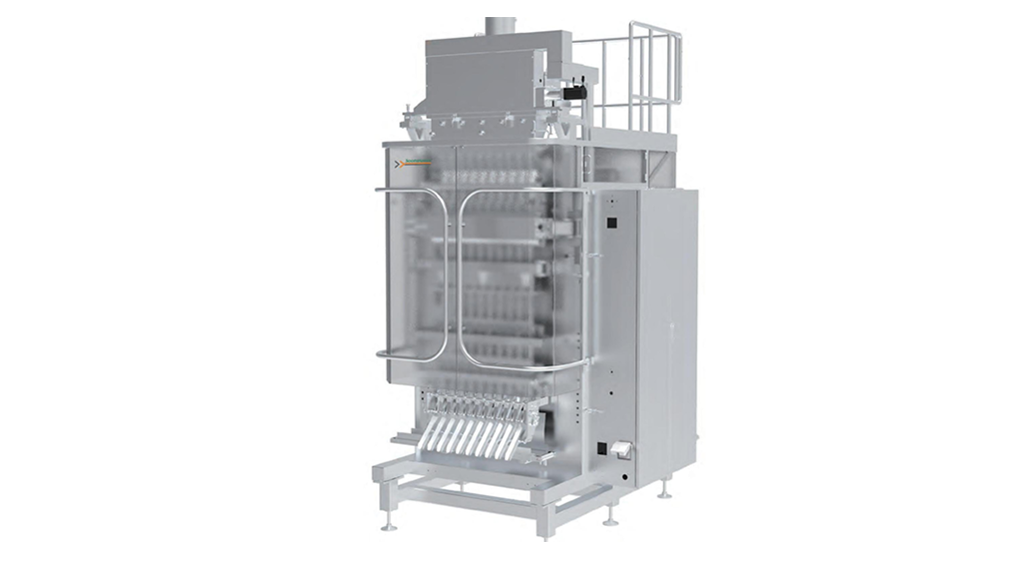
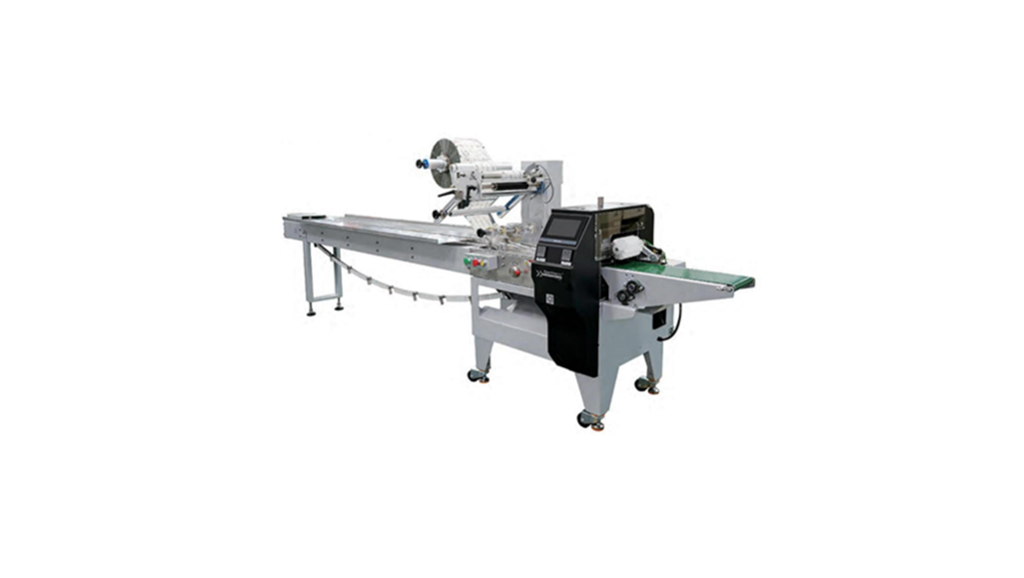
The Best Strapping Machine Solution For Your Business
52Boost Your Packaging Line With An Automatic Strapping Machine. Discover How It Improves Efficiency, Consistency, And Cost Savings For Your Business.
View detailsSearch the whole station
Choosing the right packaging machine often requires a complex trade-off between product characteristics (solid, liquid or powder), container material, target capacity and budget. What we need to consider is not only the current production scale and plant space, but also the trade-off between manual and automation, and whether the supplier can provide long-term reliable technical support and spare parts supply. Equipment selection is essentially a key investment that directly affects productivity and the bottom line of profits. In order to prevent everyone from “stepping on the pit” in this complex decision-making process, I have disassembled the core elements and steps that need to be considered, hoping to help you choose a system that is in line with the status quo and can support the future.
You must first figure out what you are wrapping-its size, shape, whether it is easily broken, and whether it is stable:
Packaging is the “face” of the product, which directly determines what technical machines you need. First confirm whether you are using plastic, roll film, carton or glass bottle.
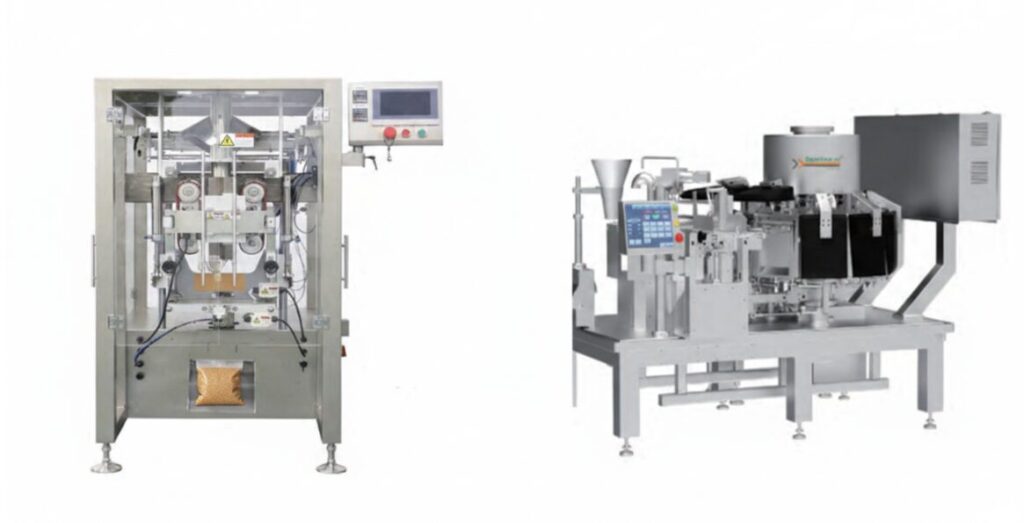
Efficiency depends on data. You have to figure out how many bags or bottles (BPM) you need to pack per minute to meet your daily output. There is a common misconception here: buying too slow machines will become a production bottleneck, but buying machines with excess speed is also a waste of capital. The right is the best.
The choice of semi-automatic or fully automatic depends on your budget and the difficulty of hiring:
Vertical sealing servo, heat sealing servo
cold sealing servo, cutter servo
Precision weighing or multi-head scales ensure consistent bag weight, with quality sensors enhancing packaging accuracy.
Automatically complete the processes of bag making, measuring, filling, sealing, bag cutting, etc., greatly improving the packaging speed.
When looking at the quotation, don’t just stare at the “total price” at the bottom “. A mature budget plan should include:
In the food and pharmaceutical industries, compliance is the red line. You have to make sure the machine meets industry standards. Staring at the equipment made of SUS304/SUS316 stainless steel, you must have the ability to “wash-down” so as to maintain a sterile environment, otherwise you can’t pass the supervision and inspection.
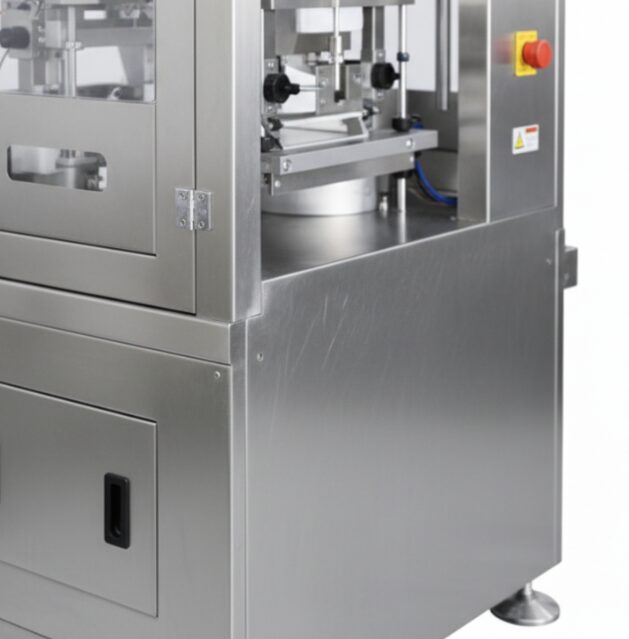
Whether the machine works well or not depends on the hardware and the after-sales. We must choose a manufacturer with real achievements. It must be confirmed that they can provide: perfect after-sales support, professional on-site installation training, and-most importantly-a stable spare parts supply chain. Once the machine is broken and there are no accessories, the loss of production in those days may be more expensive than the machine.
First make a detailed list. Write down product specifications (weight, density, temperature), production goals (output per shift), and even how much space you can free up in your workshop (including floor height).
Don’t shoot at the first offer. Find several suppliers to make plans. When comparing, don’t just look at the money, but go to the technical details: what brand is used for the core components , and whether there are any pits in the warranty terms.
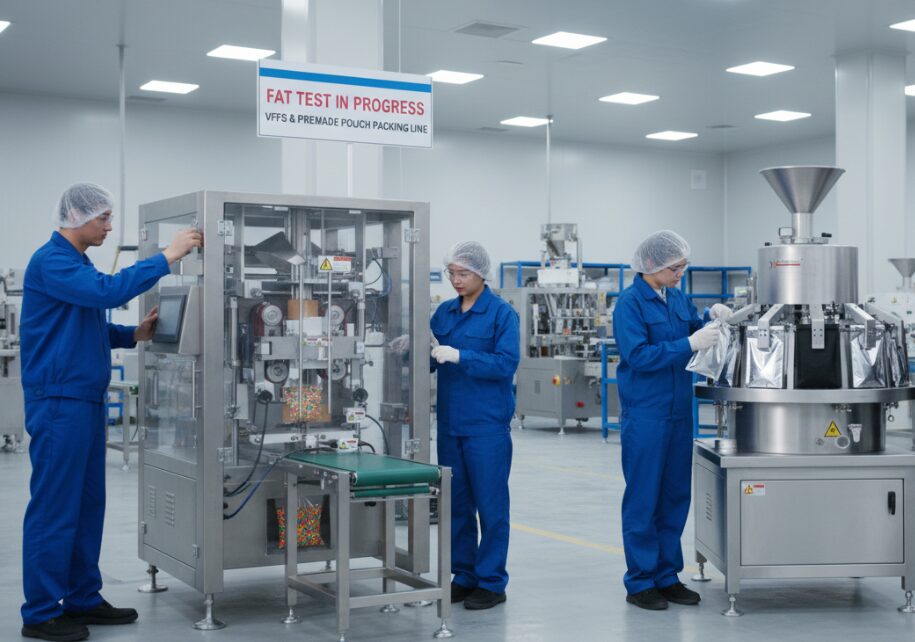
Before the machine leaves the factory, be sure to adhere to the factory acceptance test (FAT). If possible, it is best to go to the supplier’s showroom or factory in person and bring your own products and packaging materials to test the machine. Only when you see the machine running smoothly can you let it into your factory.
The packaging machine is a long-term asset. Think about whether this equipment has scalability, or whether it can flexibly adapt to future changes in packaging forms. If you spend more money today to buy a versatile machine, you may save the replacement cost of the whole line tomorrow.
Author: Alex Rivera
With over a decade of experience in industrial automation and manufacturing, I specialize in helping businesses streamline their production lines through smart equipment selection. My expertise lies in analyzing the synergy between product characteristics—from delicate powders to high-speed liquids—and packaging technology.
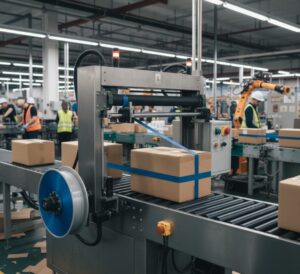
Boost Your Packaging Line With An Automatic Strapping Machine. Discover How It Improves Efficiency, Consistency, And Cost Savings For Your Business.
View details
Explore an in-depth analysis of packing machines, their types, benefits, and how they boost production efficiency.
View details
Master VFFS Packaging: Explore The 4-Stage Process, PLC Logic, And ROI Benefits For Modern Production Lines.
View details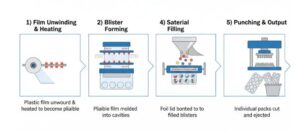
Master The Blister Packing Machine Working Principle. A Detailed Engineering Breakdown Of The Heating, Forming, And Sealing Steps.
View details