 Soonqian
How Does A Strapping Machine Work
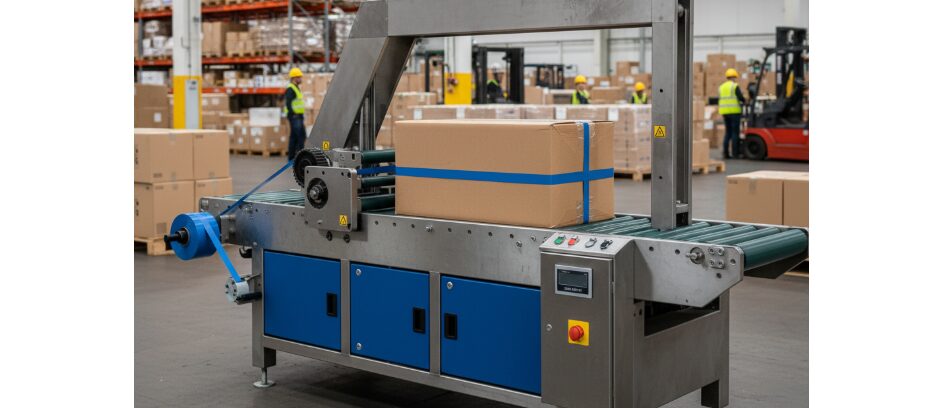
The working logic of the packer is actually to detect the product with a sensor, and then the machine automatically walks a tough plastic packing belt around your carton circles along the track. Then, it will use mechanical force to pull the strap to the exact pulling force you preset-this force should be just right to ensure that the goods are tightly bound without damaging the packaging. The next step is the key. It will use technology called “friction hot melt” to weld the joints of the packing belt. This bonding strength is often even higher than the packing belt itself, and it also saves the cost of traditional metal packing buckles. Finally, with a “click”, the machine will cut off the tape cleanly. The whole process takes less than three seconds, and the next package can keep up. The whole process is completely “unmanned” operation, which directly upgrades the previous slow, standard and inconsistent manual packaging into a high-speed and reliable automatic chemical station. This station can be seamlessly connected to your assembly line, directly solving the core needs of enterprises to increase production capacity, reduce labor costs, and make each package look professional and unified.
Strapping Machine Working Process
Baler, sometimes called strapping machine in the industry, is essentially a mechanical and electrical equipment, the core task is to simplify the packaging process before transportation or storage. Its function is to use a packing belt, usually polypropylene (PP) or polyester (PET) material, to one or bundles of goods to firmly tied. From delivery to final cut-off, the whole operation is actually a carefully choreographed 4-step cycle.
Step 1: Automatic Strap Feeding
The whole cycle starts when a package is put on the machine. The package can be put on manually or sent automatically by conveyor belt. For a fully automatic machine, as soon as the sensor detects the presence of the package, it will immediately start the packaging process. The machine will pull the material from a roll of packing tape and send it along a circular track (Arch), which just circles the package in the middle. The automation of this step directly announces the end of the era of manual wearing and packaging, which is the first step to achieve high-speed packaging.
Step 2: Precise Tensioning
After the packing belt is wrapped, the tightening mechanism begins to intervene. This component will tighten the packing strap to a pre-set and adjustable tension value at any time. This accuracy, in my opinion, is a crucial part of the whole process. It must ensure that the package is tightly bound enough, but it cannot cause any damage to the product inside or the outer box. The ability to set a specific, uniform pull value is fundamental to ensuring that every factory package has a professional and consistent appearance.
Step 3: Secure Friction-Weld Sealing
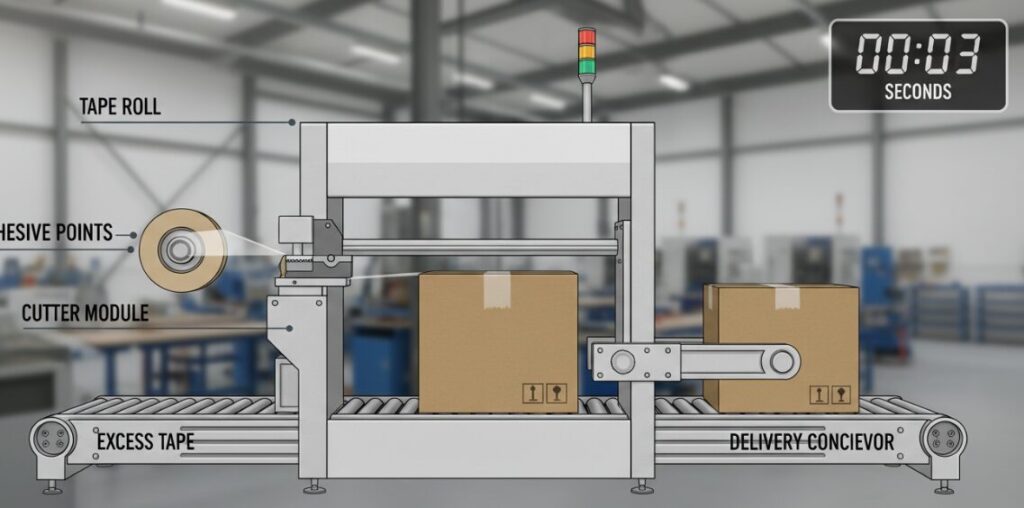
After the strap is tightened, the machine will glue the ends together. Although there are several methods of fixing, friction hot melt welding is the technology that is very common and efficient for plastic packing belts. Simply put, it is to make the two ends of the packing belt friction and vibration with each other at high speed, thus generating huge heat. This heat will instantly melt the plastic surface, and then the machine will press them together, cooling to form a very strong and durable bond. The intensity of this point, as I mentioned earlier, can often exceed the packing belt itself. The advantage of this method is that you no longer need additional packing buttons, which not only reduces the cost of consumables, but also makes the whole process easier.
Step 4: Clean And Rapid Cutting
As soon as the adhesive points are formed and slightly cured, the cutter module will start immediately and cut off the excess packing tape cleanly. At this time, the packed package can leave the machine and will usually be pushed to the next delivery conveyor. You see, the whole cycle, from start to finish, the powerful equipment can be completed in three seconds, ready for the next package.
Seamless Integration And Business Advantages
So you see, such an automated process down, almost no human intervention, its advantage is far beyond the traditional manual packaging. When a company integrates a packer into a production line or assembly line, the increase in productivity and efficiency is immediate. The reduction in labor costs is inevitable, and more importantly, it frees employees from this highly repetitive labor to handle more valuable tasks. In addition, the consistency and reliability brought about by the automation system ensures that every package is securely strapped to the same standard, which not only protects the product during transportation, but also truly enhances the brand’s professional image.
Author: Billy
As a specialist in packaging automation, I’ve spent years on the factory floor, integrating and optimizing systems just like the ones I write about. My hands-on experience has shown me firsthand how the right machinery can revolutionize a production line. I hope to demystify this technology, sharing practical insights that help businesses improve efficiency, lower costs, and achieve that perfect, professional finish on every single package.