Search the whole station
In modern manufacturing, choosing the right packaging machinery isn’t just about automation—it’s about ensuring compatibility with your product, optimizing production speed, and maintaining packaging quality. Among the most widely used systems are flow packaging machines and vertical packaging machines. While both are essential for streamlined operations, they serve distinct purposes based on product type and factory layout.
This article explores the core differences, application scenarios, and technical considerations behind these two machines, helping you determine the right solution for your production line. We’ll also discuss how Soontrue, a leading manufacturer of packaging equipment, delivers tailored, high-efficiency solutions trusted by global clients.
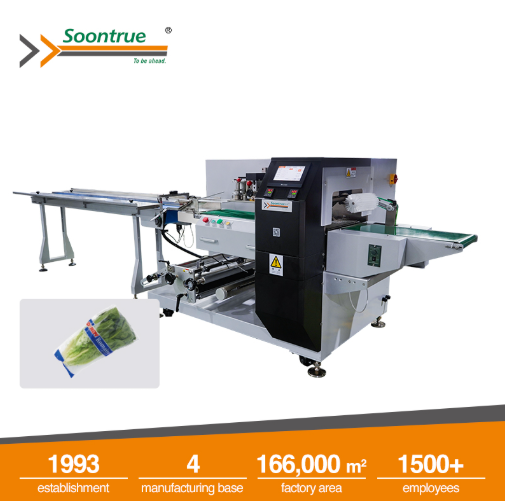
A flow packaging machine, also referred to as a horizontal flow wrapper, is designed to wrap products in a continuous motion using a film that forms a sealed pillow-style pack. The product is carried horizontally into the machine, wrapped by the film, and sealed at both ends.
This machine is best suited for uniform, solid products where high output speed and neat, protective packaging are priorities. It’s commonly used in food, pharmaceutical, and consumer goods industries.
Products like biscuits, instant noodles, chocolate bars, soap, surgical masks, and even hardware components are often packed using flow wrappers. These machines are especially beneficial for operations that:
Flow wrapping technology is ideal for high-throughput operations and ensures consistent visual quality, making it a go-to choice for branded consumer products.
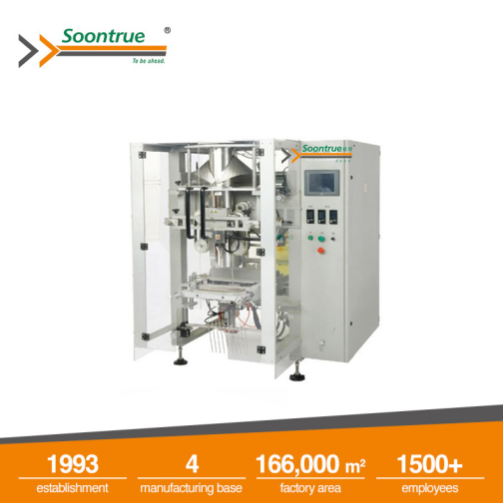
A vertical packaging machine, typically a vertical form fill seal (VFFS) machine, forms packaging from a roll of film in a vertical direction. It creates a bag, fills it with product from above, and seals the package—usually at the top and bottom.
This design is particularly effective for free-flowing products like powders, granules, or small solids. By leveraging gravity, the machine ensures smooth material flow and accurate filling.
VFFS machines are highly versatile, often used for packaging items like:
Thanks to their compact footprint and compatibility with multiple film types and bag styles, vertical machines are widely adopted across industries seeking flexibility in bag formats and efficient floor space utilization.
When evaluating which machine is right for your production line, it’s essential to consider their technical structure, packaging style, and application range. The key differences include:
Flow machines feed products horizontally. They work best with items that maintain shape and position during high-speed movement.
Vertical machines rely on gravity to feed materials, making them ideal for powders, granules, or liquids that cannot be transported flat.
These technical distinctions form the foundation of a smart machine investment. Choosing the wrong system can lead to operational inefficiencies or poor packaging outcomes, so understanding these trade-offs is critical.
Both flow and vertical packaging machines can be part of a fully automated packaging line. For factories aiming to scale production and reduce manual handling, automation is no longer optional—it’s essential.
Soontrue specializes in delivering complete packaging solutions, including:
By designing packaging lines that are fully integrated and customized, Soontrue helps factories reduce downtime, minimize human error, and ensure consistent product output. This level of automation improves not only speed but also hygiene, traceability, and packaging consistency.
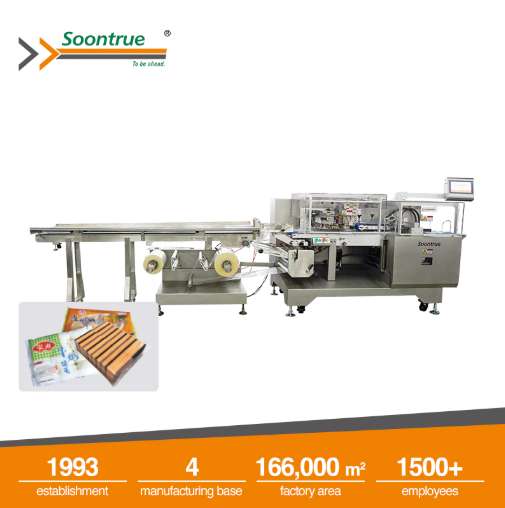
As a packaging equipment manufacturer with decades of experience, Soontrue has established itself as a reliable global partner for food, pharmaceutical, and consumer goods industries.
Whether your needs involve upgrading a legacy system or designing a fully automated line from scratch, Soontrue provides end-to-end support—from concept to commissioning.
The decision between a flow packaging machine and a vertical packaging machine is not a matter of which is “better,” but rather which is better suited to your specific product characteristics, packaging goals, and production setup.
We can help evaluate your exact requirements and propose a packaging solution that maximizes long-term efficiency and ROI.
 Soonqian