
 Soonqian
Automatic packing machine – a guide from purchase to application
1: What is automatic packaging machine?
To put it bluntly, the automatic packaging machine is just like the “awesome assistant” on your production line, which is specially responsible for “dressing” the products, and it is quick, fast and accurate. This is not a new thing. From the beginning of the semi-automatic, which requires people to help, to the fully automatic, which can handle everything by itself, it is simply the “Transformers” on the production line “.
Definition and classification:
Simply understood, it is a device that can automate the product packaging process. You can think of it as a worker who will never be tired. The key is that it is much faster than people, has great strength, and never complains. How nice.
How many forms does this “Transformers” have?
By function:
Filling machine: specially filled with liquid, such as mineral water and milk, it will be filled with a brush.
Sealing machine: seal the bag and box tightly so that the contents will not escape, just like the potato chip bag you eat.
Wrapping machine: Wrap the product with a layer of film, which means the same as the plastic wrap of fruit in the supermarket.
Labeling machine: paste your brand and information “pa” at once, and the efficiency is not blowing.
Stacker: This is amazing. It can stack boxes of products neatly on the pallet, saving the old nose.
In fact, there are many kinds of it, anyway, it is a versatile.
By product type:
Grain type: like melon seeds, rice and coffee beans, you will be weighed and bagged.
Powder type: flour, milk powder that is easy to fly powder, it can also be done.
Liquid type: beverage, oil, shampoo, filling up 1 drops will not spill.
Block type: biscuits, candy, a piece of neatly placed.
According to the degree of automation:
Semi-automatic: When the machine is partially dry, you have to put a handle beside it. For example, some filling machines have to be filled with bottles manually.
Fully automatic: basically, “you work, I work”, it’s done by itself from beginning to end, you just watch. This is definitely the trend of the future!
Core advantages:
I tell you, once you use the automatic packaging machine, you will know what “can’t go back”. The benefits it brings, that is real:
Efficiency is rising: what ten people used to do can now be done by one machine, and the speed is very fast. Especially the kind of mass production, efficiency is simply exponential. I remember when we first got the first one, the colleagues on the production line were dumbfounded. The amount that could have been completed in one day was completed in half a day.
Cost Brush Down: This is the most critical point! How expensive is labor now? It also depends on welfare and management. A machine has just started to invest some money, but in the long run, it is definitely a sharp tool to save money. Less labor, less human error, rework rate is naturally low.
Quality steady rise: machine, it has no mood, not tired. Every time the packaging can maintain the same high level, the seal is tight, and the label is affixed to the plate. Your product packaging looks good, consumers naturally prefer, brand image is not up?
Safety is more secure: especially in the food and pharmaceutical industries, machine operation can reduce human contact, and the hygiene and safety of products are even more relevant. Moreover, some dangerous work, let the machine to do, employees are safer, the best of both worlds.
Super adaptability: now the automatic packaging machine is very “smart”, change the mold, adjust the parameters, can adapt to different sizes, shapes of products, and even packaging materials can be changed. This flexibility is really incomparable to manpower.
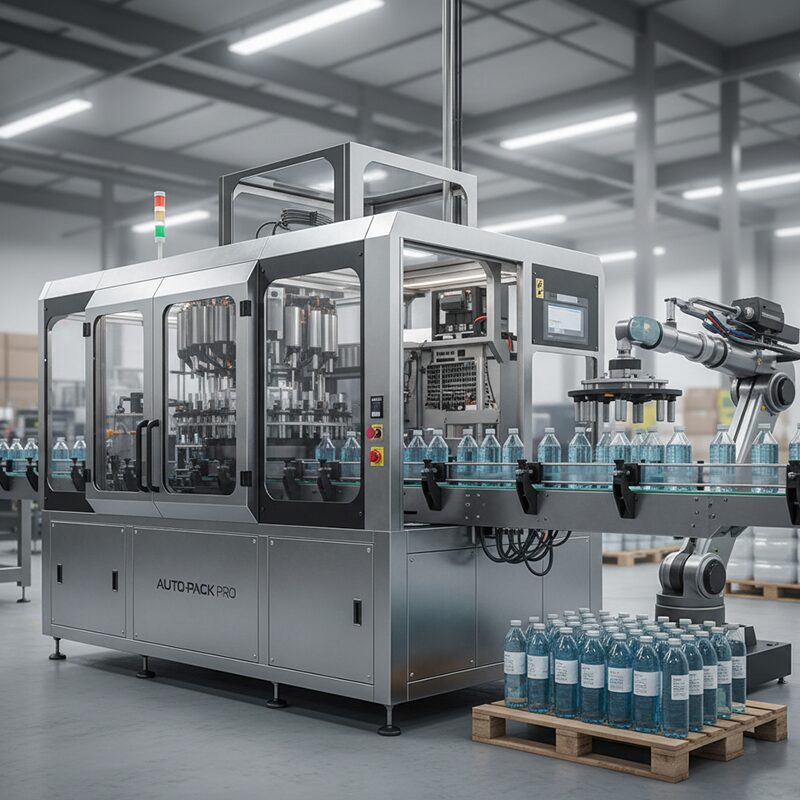
2: How to choose the right automatic packaging machine?
Hey, friends! Let’s talk about how to choose this automatic packaging machine. This is no small matter. To be honest, this thing is a bit like finding a capable assistant. You can’t do it randomly; you have to think it over carefully.
First of all, you have to figure out exactly what you want, right? Don’t laugh. Many people are really stuck here.
What does your product look like? Powder, granules, liquid, or a regular box? Shape, size, weight and fluidity all need to be made clear. You can’t expect a coffee powder machine to pack a big box. That’s not realistic.
How do you plan to package it? Seal the bag? Packing in a box? Or just wrap it with shrink film? Different packaging methods correspond to different types of machines.
How fast do you want? How many are wrapped in one minute? How much output needs to be completed in a day? This requirement directly determines the configuration and investment of your machine. Don’t expect the sluggish machines to handle large orders. That will drive you crazy.
Is the budget sufficient? Well, there’s no need to explain this much, right? The thickness of your wallet determines what grade of machine you can choose. However, in my personal opinion, when it comes to industrial equipment, price and quality are usually directly proportional.
Is it easy to connect the existing production line? When you buy a new machine, it can’t be out of place with the existing equipment in the factory, can it? Whether it can be seamlessly integrated or not, this integration issue needs to be considered in advance.
Then, one also needs to have a basic understanding of those technical parameters. Don’t get a headache at the sight of a bunch of professional terms. In fact, they are all key indicators.
Speed, accuracy, compatibility. Speed refers to how many packages can be wrapped per minute, precision refers to the size of the error, and compatibility refers to how many different specifications of products can be processed. In my opinion, these three points are the basis for evaluating whether a machine is “easy to use or not”.
Degree of automation. Nowadays, most machines are controlled by PLC, and screen operation is also very common and convenient. If it can be linked with robots, the efficiency will be beyond reproach. Of course, the smarter it is, the more expensive it is. This is common sense.
Energy consumption, noise, land occupation. All of these are closely related to your operating costs and working environment. No one wants to buy an electric guzzler or a machine that’s so noisy it will kill you, and the size of the machine also has to match the space of your workshop.
Material and hygiene standards. This is particularly important, especially if you are in the food or pharmaceutical industry, it is of Paramount importance! The materials that the machine comes into contact with the product and the convenience of cleaning must strictly comply with hygiene requirements. This is the bottom line.
Then, suppliers really need to be carefully selected. Sometimes, I think this is more crucial than the machine itself.
Brand reputation and market share. Although big brands cannot guarantee 100% perfection, at least they have a lower risk of running away and their after-sales service is relatively reliable. Everyone has chosen it, so it can’t be wrong anyway.
Research and development capabilities and technological updates. Only manufacturers willing to invest in research and development can provide you with more advanced and efficient solutions. After all, technology is always advancing.
After-sales service and technical support. I must emphasize this point! After purchasing a machine, installation, training, and daily maintenance – none of these aspects can do without good after-sales service. After using a machine for a long time, it’s inevitable that some minor problems will occur. If the supplier turns a blind eye to it, you’ll be in big trouble. Having a reliable after-sales team can really save you a lot of trouble.
Customization capability. Sometimes, your production requirements may be rather special and cannot be met by standard models. At this point, it all depends on whether the supplier has the ability to tailor a solution for you.
Finally, remember to calculate the return on investment (ROI). Don’t just focus on the immediate expenses. You need to consider how long it will take to recoup the investment.
3: automatic packaging machine in different industries, this thing in the end how “universal”?
Automatic packaging machine? You may think this thing is far away from us, or only big companies can play around. Hey, then you’re wrong! This thing in a variety of industries, it is simply a “all-faceted”, the breadth of application beyond your imagination.
Food industry: When it comes to packaging, food is definitely a big piece of 1 that can’t be bypassed. Look at those potato chips, drinks, as well as those meat and fresh bread in the supermarket, which one does not need fast and hygienic packaging? The automatic packaging machine is here, and the efficiency is almost full. It allows products to put on “clothes” as quickly as possible, reduces human contact, and is called “stable” for food safety and shelf life “!
Pharmaceutical industry: Well, the requirements for precision and sterility are basically the “highest level. Medicines, medical devices, and various health products, that is really not ambiguous. The automatic packaging machine is here to provide a stable, reliable, and high-standard (such as GMP) packaging solution. Like what tablet counting, capsule filling, blister packaging, these are its strengths. It ensures that each product is accurate and avoids cross-contamination, which is, after all, a human-life affair.
Daily chemical industry: detergents, cosmetics, personal care products, these things we use every day, packaging in addition to practical also have to “take”. The automatic packaging machine is very powerful. It can not only fill things in and seal the mouth, but also stick the labels neatly and make the batch numbers clear, making the products look professional from inside to outside. If it were all artificial, the picture would be too beautiful for me to look.
Electronics industry: those delicate electronic components, small electrical appliances, packaging to both anti-static and anti-vibration, it is fine work. The automatic packaging machine is here, acting “carefully”. It can accurately position, gently grasp, to ensure that these baby bumps on the road will not “hurt”. Personally, I think that machines are much more reliable than people in this kind of work that requires “embroidery” kung fu.
Other industries: Of course, its application is far more than that. The logistics industry uses it to pack and improve sorting efficiency. Packing seeds and fertilizers in agriculture; Even the building materials industry can see it when packaging cement and ceramic tiles. Anyway, my point is that as long as there is a packaging demand, the automatic packaging machine can always find a place where it can “use its fist.
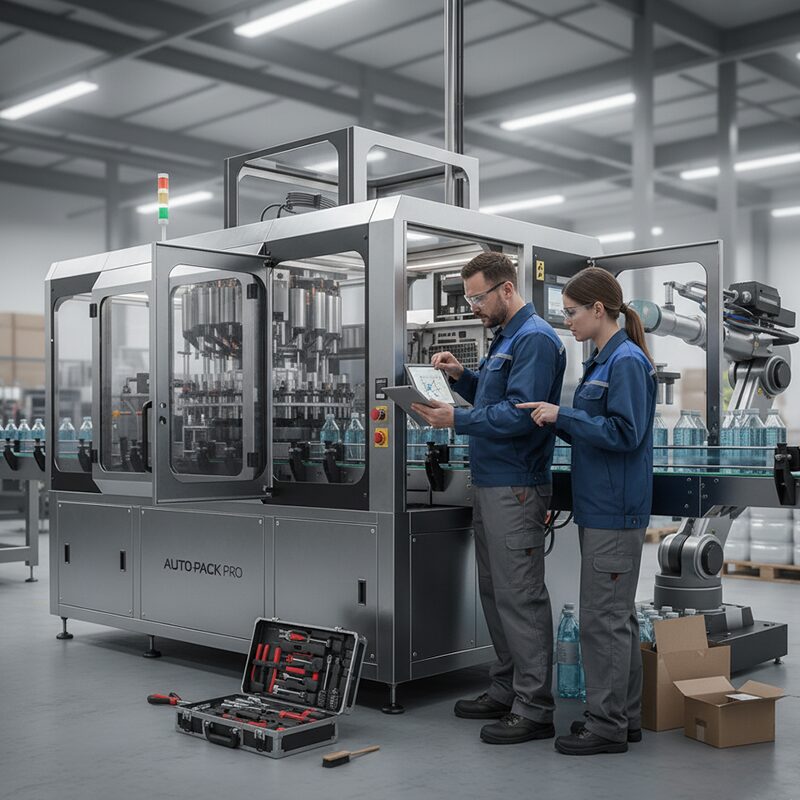
4: Automatic packaging machine operation and maintenance
To tell the truth, the automatic packaging machine looks bluffing, but when you get started, you will find that the operation and maintenance are not so mysterious at all. The key is to follow the steps and stop messing around.
Daily operation process:
Usually when we start the machine, we adjust the parameters of speed and temperature according to what we want to pack, then put the materials in and click on the operation to finish. If you want to stop the machine, remember not to feed the materials first, and then cut off the power supply when the machine has finished processing the rest. You see, isn’t it quite intuitive? But how to adjust those parameters is the most appropriate, which really depends on experience slowly groping.
Common faults and troubleshooting:
The machine, there are always some minor problems, very normal. For example, the bag is not tight? Most of the sealing temperature is not enough or the pressure is not adjusted properly. If the material is stuck, the first reaction is to see if there is any foreign matter blocked or if there is something wrong with the feeding mechanism. Most of the time, these small problems can be solved by a little tinkering. Don’t be fooled 1 something goes wrong, try a few more times, and you will find that you can become a “local expert.
Daily maintenance:
This should be taken seriously! How long the machine can last depends on how you serve it at ordinary times. The most basic thing is to clean up regularly, especially where there is contact with the product, and must be healthy (kept clean). Then there is lubrication. Remember to oil the moving places regularly so that the machine can run smoothly. There are also parts that are easy to wear, such as blades and belts, which should be changed as soon as possible. Don’t drag down the big machine in order to save a little money.
Safety operation specification:
This article must be carried out separately and emphasized! Operating the machine, safety is always the first. Don’t stretch your hands into the running parts; when the machine is moving, don’t open the protective cover indiscriminately; if there is a problem, stop the machine for treatment as soon as possible. Also, safety helmets and protective gloves should be worn as soon as possible. Don’t be too troublesome. After all, safety cannot be overemphasized.
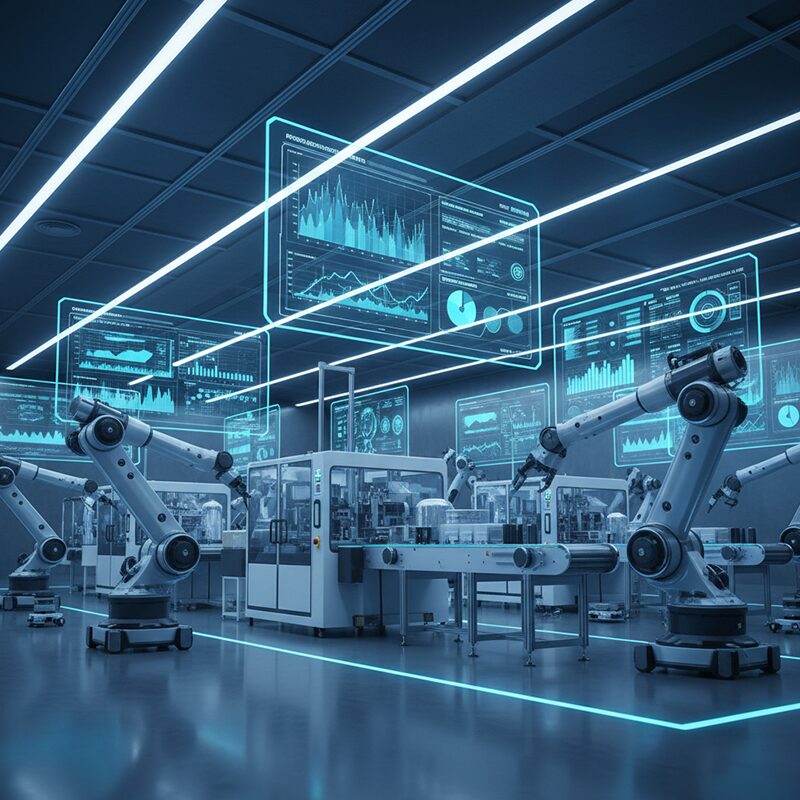
5: Automatic packaging machine future trends and prospects
Looking forward to the future, I dare say that the automatic packaging machine will definitely become more and more “smart” and more and more “green”.
Intelligence and Internet of Things (IoT): The packaging machine of the future is not as simple as knowing how to work. It collects data through various sensors and uploads it directly to the cloud, which allows for remote monitoring. I can even think that even if you are thousands of miles away, you can check the situation of the production line at any time through the mobile phone APP. If something is wrong, the system will immediately call the police and even tell you which part may be out of order in advance. This kind of data analysis and predictive maintenance is simply a “god operation” to reduce downtime and improve efficiency “.
Flexibility and customization: In this market, the demand is really varied. Small batch and multi-variety production has become the norm. Therefore, the future packaging machine will definitely be more “flexible” and can quickly switch product types to adapt to different packaging needs. I personally think that this flexible ability is definitely one of the keys for future companies to gain a firm foothold in the market.
Green environmental protection: environmental protection will only become more and more important, not one of them. The future packaging machine will definitely be more energy-efficient and minimize energy consumption; at the same time, it will also try to reduce the waste of packaging materials, and even directly use recyclable and degradable new environmentally friendly materials. This is not only the social responsibility that enterprises have to bear, but also the 1 inevitable trend of future development, which is not negotiable.
Human-machine collaboration: The deep integration of robots and automatic packaging machines is nothing new, but I feel that the future will be deeper. Robots can do jobs that are repetitive, dangerous or require high precision, while we humans can focus on things that require more creativity and judgment. Personally, I think this mode of human-computer cooperation is the real efficient production mode.
Industry standards and regulations: As globalization becomes more prevalent, compliance with international standards and regulations becomes important. This means that the future packaging machine should not only lead in technology, but also reach the international level in safety, health and environmental protection. This is both a 1 challenge, but from another perspective, it is also a great opportunity.
