
 Soonqian
Flow Wrap Machine Working Principle
This is actually a process of accurately converting the entire roll of film into a sealed protective bag that tightly wraps the product during high-speed movement.
Figuring out this principle is a prerequisite for achieving large-scale production. The core of the operation of the pillow machine lies in four highly synchronized stages: first, the film is unfolded under precise tension; second, the film is folded into a tube through a bag maker; third, the product is stuffed in through a feed conveyor; and finally, the longitudinal back cover and transverse cut are completed simultaneously using a rotary sealing cutter.
PLC control and servo motor synchronization technology are basically standard on today’s machines. This combo punch can pull the speed directly to over 200 packs per minute while minimizing material loss. This is really the most straightforward solution for bosses who are struggling with high labor costs and inconsistent packaging quality.
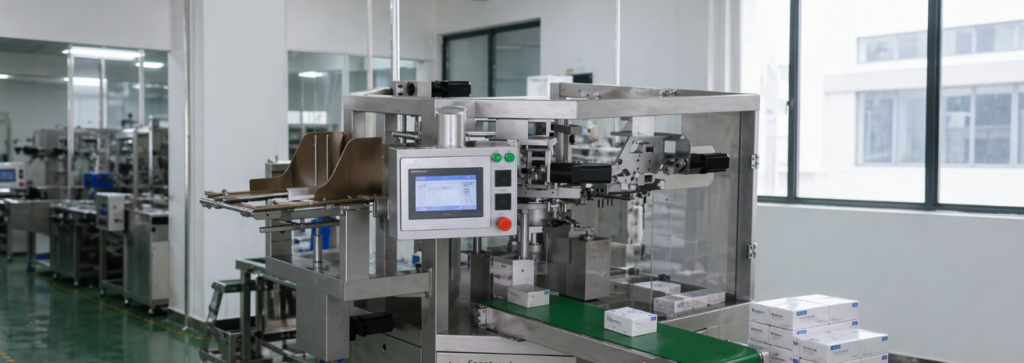
Key Stages Of The Pillow Packaging Process
If you want to optimize the production line, you have to work hard on these four links. When making the scheme in Soontrue, we were almost demanding on the precision of these stages, because if the chain fell off at any link, there would be problems with the final packaging product.
1. Precise film uncoiling
It all starts with a roll of heat seal or cold seal. The uncoiling system of the machine is equipped with tension control rollers, which are to ensure that the film is neither wrinkled nor pulled off when entering the system. In my experience, many production line downtime is often due to breakage or alignment deviation caused by the film tension not being adjusted properly, which is absolutely to be avoided in large-scale production.
2. Bag Maker Forming: From Flat to Tubular
As the film moves forward, it passes through an assembly called a “bag maker”, which is a technical job. It is responsible for folding the flat film into a continuous hollow tube. We tailor the geometry of the bag maker to the size of the product, ensuring the packaging film fits snugly against the product. Don’t underestimate the degree of cooperation. Every millimeter of film saved is a real profit at the level of hundreds of thousands of production.
3. Synchronous product insertion
While the film is being formed, the feed conveyor belt must precisely feed the product into that moving film tube. In our high-speed HFFS system, this synchronization is on the nanosecond scale. The product must fall exactly in the center of the preset “bag area”. If it is slightly off, it will cut into the product when sealing, or contaminate the sealing area, causing air leakage.
4. Sealing and Cutting
Finally, there are two key sealing actions:
- Longitudinal mesosealing: The two sides of the membrane are brought together and sealed from the bottom or back to form a continuous tubular membrane.
- Transverse end sealing and cutting: The rotary sealing cutter seals the two ends of the bag while cutting it with a click. This double action guarantees the sealing of the package while maintaining an amazing output of 200+ per minute.
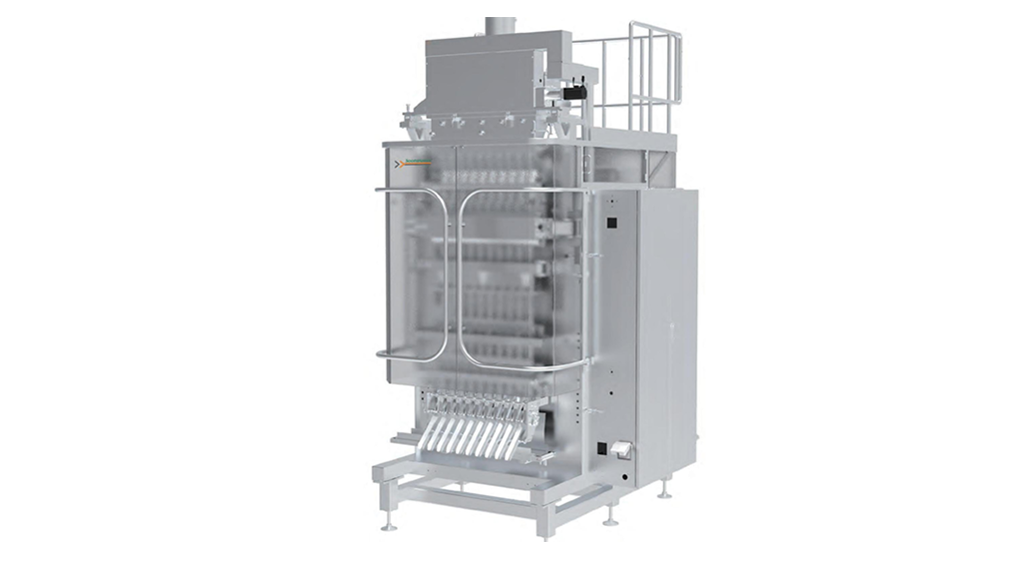
Vertical Packing
Vertical sealing servo, heat sealing servo
cold sealing servo, cutter servo
DKXL-650
Precision weighing or multi-head scales ensure consistent bag weight, with quality sensors enhancing packaging accuracy.
WP20
Automatically complete the processes of bag making, measuring, filling, sealing, bag cutting, etc., greatly improving the packaging speed.
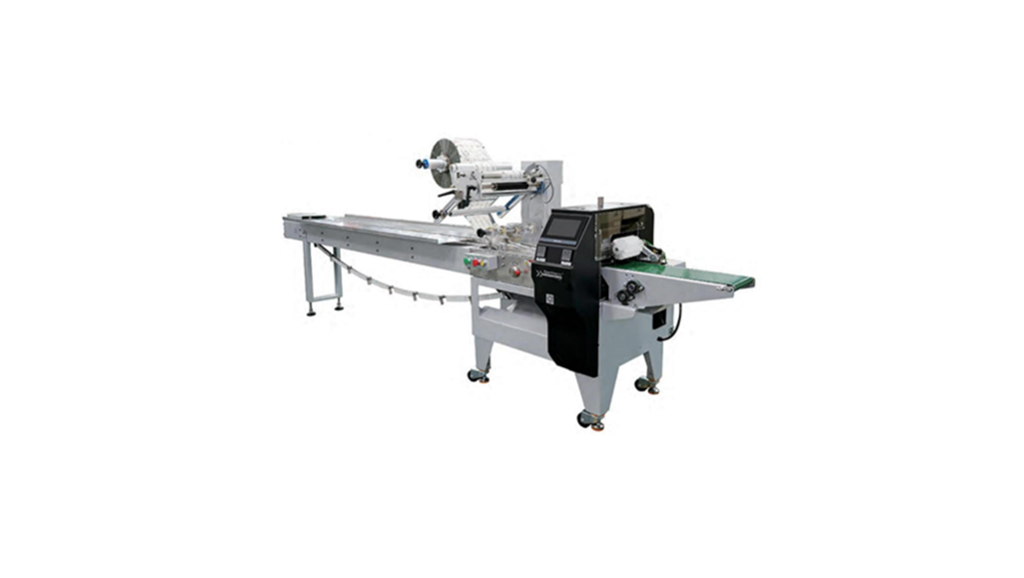
PLC And Servo Technology: The “Brain” Of Modern HFFS
Today’s pillow packaging machines are no longer the old ones driven by simple mechanical links. The core is now PLC (programmable logic controller) and servo motor system.
This system is the “brain” of the machine. Servo motor can control feeding, film drawing and knife sealing independently. This brings three very useful features:
- Zero-Packaging Protection: If the machine senses that there is nothing at the feed level, the sealing knife will automatically idle to avoid wasting the membrane.
- Material saving mode: Precise control can shrink the bag head and tail to the shortest possible time, directly cutting off the raw material cost.
- Quick production change: Change the product size, just click a few times on the PLC screen, no need for the master to adjust the robotic arm for half a day, the production line’s production rate will increase immediately.
Why Is It Important To Understand This Principle?
It is directly related to your ROI. We help manufacturers implement HFFS solutions, the core of which is to solve three pain points:
- Cut the labor costs: Automated packaging directly replaces the slow, hand-bagged packaging of the past. A worker can now stare at several lines and produce thousands of thousands of packages per hour.
- Brand consistency: The bags for people are loose and tight, and each bag sealed by the machine looks exactly the same, and it feels completely different on the shelf.
- Extended shelf life: The sealed environment formed by pillow packaging can prevent moisture and oxidation. Whether it’s food or medical-grade hardware, sealing is the lifeline of the product.
Summary
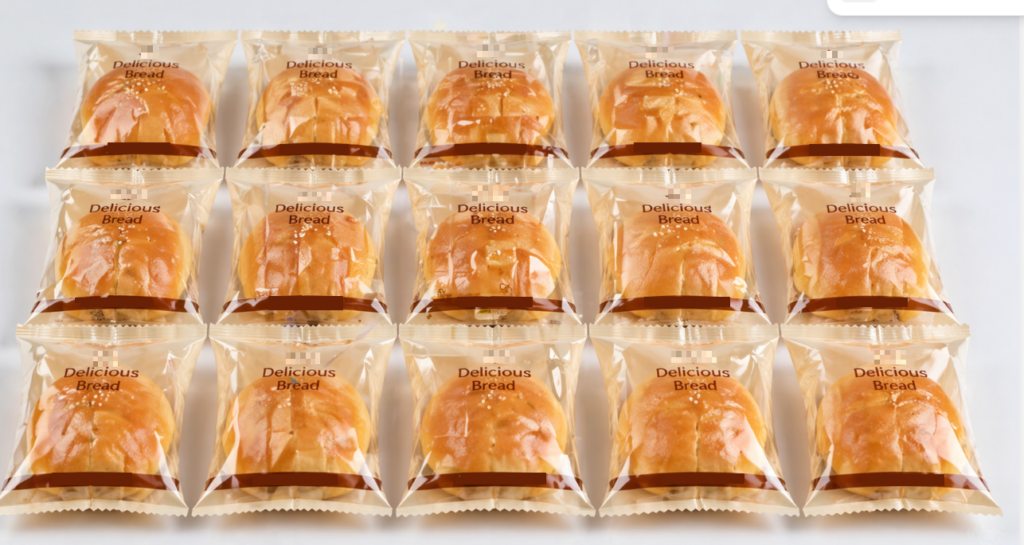
The working principle of pillow packaging machine is actually an engineering aesthetic about “synchronization”. In milliseconds, transform a plain plastic film into a high-performance protective layer. If you’re looking to upgrade your production line for higher-speed, more stable HFFS technology, then checking out our advanced solutions, which have been a long time coming, at Soontrue is definitely the first step towards superior packaging.
Author: Alex Chen
“I am a packaging automation specialist in the machinery industry. Currently, I focus on developing high-speed HFFS (Horizontal Form Fill Seal) solutions . My passion lies in bridging the gap between complex engineering and practical production goals. By optimizing the synchronization of PLC and servo systems, I help manufacturers transform their production lines into high-efficiency operations that reduce waste and maximize ROI. “
