
 Soonqian
How Vertical Form Fill Seal (VFFS) Packaging Machines Work
When it comes to improving the efficiency of the packaging production line, the vertical bag-making, filling and sealing packaging machine (VFFS) is definitely the core that cannot be bypassed. The logic of this machine is to turn flat film into sealed packaging that can be directly put on shelves through a series of silky automatic actions. When helping customers to do system integration, I often emphasize that the core technical point of VFFS lies in how it synchronously performs the key actions: first, the film is pulled out from the take-up reel and bent into a cylindrical shape through the forming cylinder; Then, the longitudinal sealing roller or sealing strip is heated and pressurized to complete the longitudinal sealing. Finally, linkage measuring equipment such as multi-head scale or screw filling machine to accurately pour materials into bags, finally, the final seal is completed by the cross-sealing cross-cutting mechanism. The whole set of actions are scheduled by the PLC system in the time difference of milliseconds. This high speed, low loss characteristics, but also why it can become the preferred solution of puffed food, powder materials.
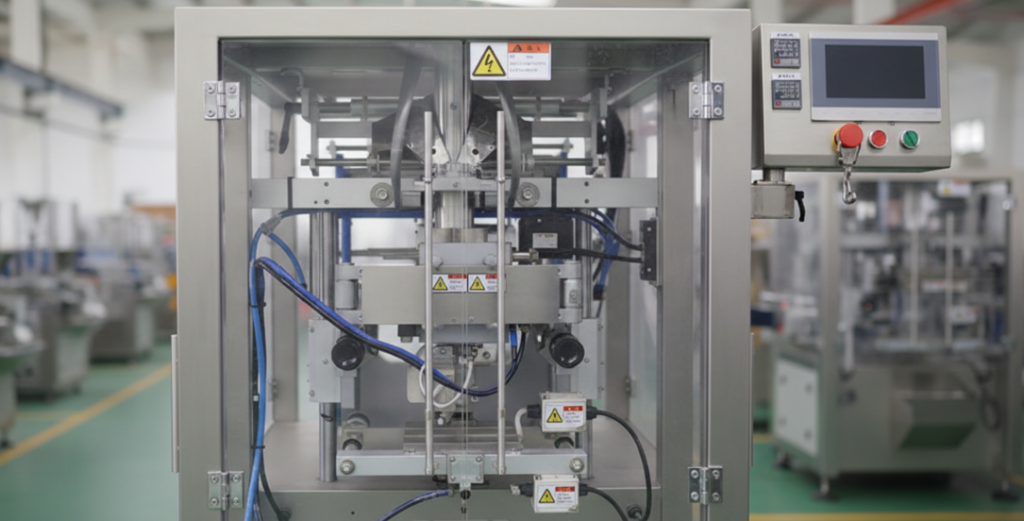
VFFS Process Flow
To understand why VFFS is so efficient, we have to keep an eye on the continuous cycle of film conversion and material filling.
The first stage: film tension control and molding
The whole process starts with the unwinding shaft, which is loaded with composite film or polyethylene film. Under precise tension control, the film is pulled through a set of guide rollers and sent to the forming cylinder. The key component here is the collar-like “former” (Forming Shoulder). If the former is not well designed or the tension is not adjusted correctly, the film can easily stretch or even tear. The former is responsible for rolling the flat material into a cylindrical “sleeve”. This transition must be extremely smooth, otherwise the structural integrity of the bag cannot be guaranteed.
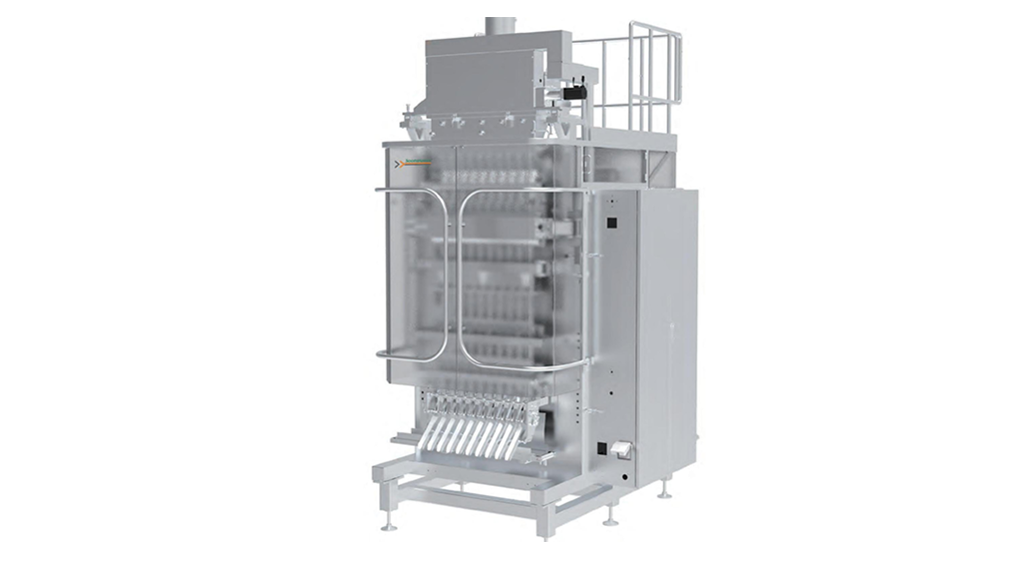
Vertical Packing
Vertical sealing servo, heat sealing servo
cold sealing servo, cutter servo
DKXL-650
Precision weighing or multi-head scales ensure consistent bag weight, with quality sensors enhancing packaging accuracy.
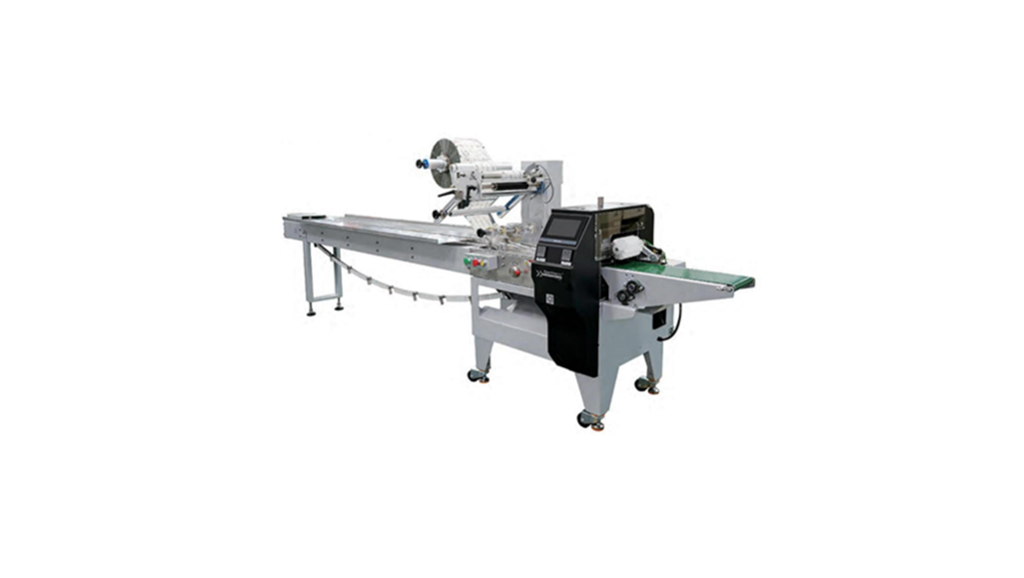
WP20
Automatically complete the processes of bag making, measuring, filling, sealing, bag cutting, etc., greatly improving the packaging speed.
The second stage: longitudinal sealing
When the film is tightly wrapped around the forming cylinder, the edges will overlap. At this time, the longitudinal seal will be pressed up. It fuses the edges of the film together through precisely controlled temperature and mechanical pressure. This forms a continuous packaging tube, ready to accept materials at any time.
The third stage: integrated metering and material filling
This step is the embodiment of VFFS “filling” function, and it is also the most test of integration capability. Depending on the material form, we need to match different metering heads:
- Multi-head scale: suitable for particles such as snacks and hardware that require extremely high weighing accuracy.
- Screw filling machine: specially deal with coffee powder, flour such fine powder.
- Volusional cup filler: used for materials with good fluidity and uniform particles.
The logic of the PLC system must ensure that the material falls within milliseconds, the bag has been formed and sealed below, and the material must not fall into the sealing area, otherwise it will cause sealing clip material, which is a fatal quality problem in the food industry.
The fourth stage: horizontal sealing and cutting
After the material falls into the bottom of the forming tube, the horizontal sealing mold is closed. This pair of molds do two things at the same time: seal the top of the current bag, and seal the bottom of the next bag. With a sharp cutter in the middle of the mold, a sealed bag is separated from the continuous roll.
PLC Control System: The “Brain” Of The Packaging Machine
Today’s packaging machines can’t run at high speeds without a powerful PLC (programmable logic controller). It is impossible for human eyes and human hands to achieve that kind of synchronization rate. PLC real-time monitoring of several core indicators:
- Temperature control: For films of different thicknesses, it must be ensured that the sealing strip is always at the optimal temperature.
- Timing coordination: The film drawing speed must be perfectly aligned with the discharge frequency of the metering equipment to squeeze out the highest number of packages per minute (BPM).
- Color tracking: rely on the photoelectric sensor to capture the printed color on the film, to ensure that the pattern on the package is always centered, will not run off.
Flexible Bag Type And Industrial Application
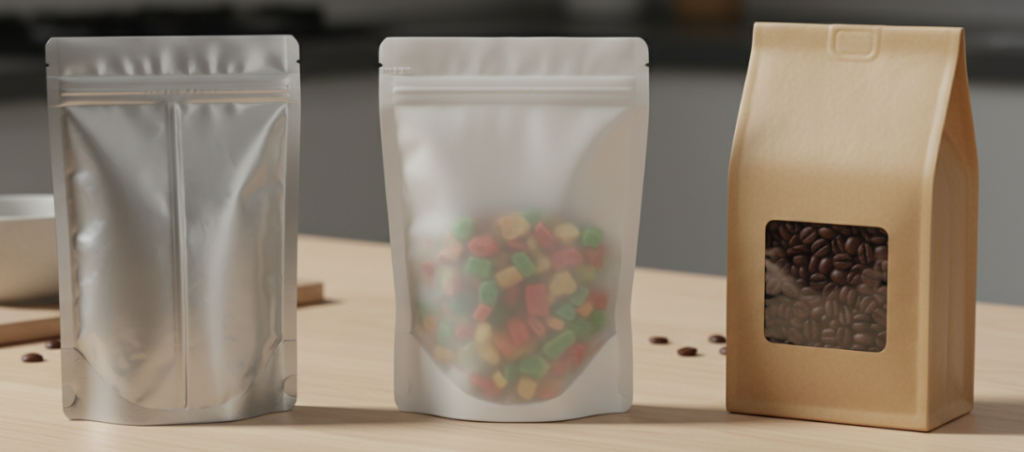
Many factory owners choose VFFS, mainly because of its flexibility. Sometimes it is only necessary to change the forming cylinder and adjust the sealing parameters, and one machine can produce several kinds of bags:
- Pillow bags: the most classic, most material-saving snack bag.
- Gusset Bags: The side folds in, expands the capacity, and looks better on the shelf.
- Flat Bottom Bags: suitable for high-end coffee or retail display, stable and atmospheric.
Why Must Modern Production Lines Have VFFS?
In addition to the mechanical action itself, the return on investment (ROI) that VFFS brings to the plant is very impressive. By integrating bag making, filling and sealing in a vertical space, companies can:
- Reduce material loss: Extremely precise film walking and cutting can minimize waste.
- Save on labor costs: usually one worker can look after several VFFS production lines.
- Improve product safety: This heat seal provides excellent barrier properties, extends shelf life and prevents contamination, which is just needed in the food and pharmaceutical industries.
As long as you master the synchronous logic of film forming, accurate metering and sealing, VFFS is the “gold standard” for high-speed and flexible packaging worldwide “. The feedback from each sensor is related to the appearance of the last bag of products.
Author: David Chen
I am a senior packaging system integration specialist with over a decade of hands-on experience in industrial automation. My expertise lies in optimizing production line efficiency through precise PLC logic and mechanical synchronization.
